This guidance is designed to help practitioners and project proposers implement environmental review processes more effectively and efficiently. It is best read alongside Minn. R. 4410.3610. Contact us with any questions via email Env.Review@state.mn.us or by phone 651-757-2873.
Frequently downloaded documents:
Recommended Content and Format: AUAR Documents
Environmental Review Distribution List
Tribal notification for environmental review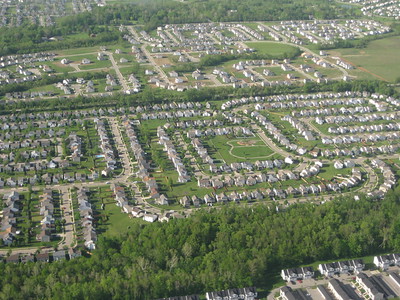
Page contents
Overview
Applicability
Key elements of the AUAR
How to complete the AUAR
After adoption: appeals
Audits
Publishing and distributing
Additional information
Overview
AUARs are a type of environmental review process that has attributes of both an Environmental Assessment Worksheet (EAW) and an Environmental Impact Statement (EIS). Local governments with comprehensive plans that meet the requirements of Minnesota Rule 4410.3610, subpart 1 may use an AUAR as an alternative form of environmental review to understand how different development scenarios will affect the environment of their community before the development occurs.
The AUAR process is unique in that it provides environmental review of anticipated residential, commercial, warehousing, or light industrial development and associated infrastructure in a given geographic area, instead of environmental review conducted for each individual project after it is proposed. This alternative review is based on the premise that the local government conducting review (known as the responsible government unit or RGU) can determine the potential environmental effects typical of the anticipated development scenario(s) because they have been identified and considered during the comprehensive planning process.
Upon completion of the AUAR, residential, commercial, warehousing, and light industrial development projects and associated infrastructure within the boundaries that are consistent with development assumptions used in the review are exempt from the EAW and EIS procedures (parts 4410.1100 to 4410.1700 and 4410.2100 to 4410.3000) as long as the approval and construction of the project complies with the conditions of the plan for mitigation (Minn. R. 4410.3610, subpart 2, item A).
RGUs set the boundaries of the AUAR’s geographic area and typically conduct environmental analysis of development scenarios using assumptions based on the maximum development expected or allowed by the land use designation in the comprehensive plan. This approach benefits communities by providing a “big picture” of potential environmental effects early in the development planning process, potentially influencing development design and thereby avoiding cumulative potential effects rather than only mitigating them.
AUARs can promote efficiency and predictability by eliminating the need to prepare and review multiple environmental documents for projects within the AUAR boundary. Project proposers benefit from having environmental review completed in advance of their projects, and communities benefit when information gathered in the AUAR process is used to guide future local planning (including public infrastructure construction plans) and zoning decisions.
The AUAR contains two pieces: the analysis itself and the plan for mitigation. For the AUAR to remain valid, RGUs must update the AUAR documents every five years until all development in the area is approved, or under the circumstances described in Minn R. 4410.3610, subpart 7. For an AUAR to serve as environmental review of a project in the development area, that individual project must be of an applicable type, consistent with AUAR assumptions, and compliant with AUAR mitigations.
Applicability
Only local governmental units (LGUs) serving as the RGU can use the AUAR process. They must verify that their adopted comprehensive plan includes all elements listed in Minn R. 4410.3610, subpart 1.
The RGU can only use the AUAR for certain types of development scenarios. Specifically, an AUAR can serve as environmental review of residential development, commercial development, warehousing, light industrial development and infrastructure associated with development (Minn R. 4410.3610, subpart 1), such as roadways, water, sewer and stormwater systems.
The AUAR cannot serve as environmental review for certain projects even if they are within the geographic boundaries and mentioned in the development scenarios of an AUAR. Projects that meet a threshold requirement of a mandatory category under Minn R. 4410.4300 or 4410.4400 other than residential, commercial, warehousing, and light industrial category types must complete an EAW or an EIS.
The AUAR rule provides that an AUAR may not be used to review certain project types listed in 4410.3610 subpart 1. These projects include:
EAW Mandatory Categories
- Nuclear fuels and nuclear waste
- Electric-generating facilities
- Petroleum refineries
- Fuel conversion facilities
- Pipelines
- Transfer facilities
- Underground storage
- Storage facilities
- Metallic mineral mining and processing
- Nonmetallic mineral mining
- Paper or pulp processing mills
- Air Pollution
- Hazardous waste
- Solid waste
- Wastewater C, D, E
- Water appropriation and impoundments
EIS Mandatory Categories 
- Nuclear fuels and nuclear waste
- Electric generating facilities
- Petroleum refineries
- Fuel conversion facilities
- Underground storage
- Metallic mineral mining and processing
- Nonmetallic mineral mining
- Paper and pulp processing mills
- Hazardous waste
- Solid waste
- Incinerating wastes containing PCBs
Key elements of the AUAR
The AUAR process combines elements of the EAW and EIS processes for a defined area – rather than a singular project – and includes a few additional unique elements. This section of the guidance addresses the key elements required for AUAR processes and documents, including the comprehensive plan, the geographic boundaries of the review, scenario development, project scoping for Large AUARs, the analysis document, the mitigation plan, and the prohibition on final government decisions until the completion of environmental review.
Comprehensive Plan
The RGU must have an adopted comprehensive plan (including land use, public facilities, transportation, sewage collection system policy and an implementation program) to use the AUAR (Minn. R. 4410.3610, subpart 1.)
An AUAR must incorporate a development scenario consistent with the RGUs current comprehensive plan. If the comprehensive plan is being amended, the RGU may choose to start the AUAR after the amendments are complete. Otherwise, the RGU may include a development scenario that is based on the existing plan as well as any proposed amended plans.
If the existing comprehensive plan lacks any of the elements required, but the RGU finds that the lacking element “would have no substantial effect on the purpose of or outcome of the environmental review,” the RGU may ask the EQB chair for authorization to use the AUAR procedures (Minn. R. 4410.3610, subpart 1).
Boundaries
Because an AUAR evaluates potential environmental effects of development scenarios in a geographic area, the RGU defines the review area boundaries and the scenarios, or the “anticipated nature, location, and intensity” of development (Minn. R. 4410.3610, subpart 3) in an adopted “order for review”. RGUs may set the boundary of the study area based upon existing comprehensive plans, specific planned development or redevelopment, existing infrastructure, or natural features. The RGU may not expand this boundary after the AUAR is adopted. If future projects requiring environmental review are proposed adjacent to the existing AUAR, the RGU may choose to review them using EAW or EIS processes or initiate a new AUAR that includes the project.
Specification of development scenarios
The AUAR contains and evaluates development “scenarios,” or hypothetical but reasonable descriptions of anticipated or possible future development. Within the designated geographic area, the RGU may specify one or more scenario(s) of anticipated development. RGUs can incorporate multiple scenarios that reflect differing viewpoints. Scenarios may offer different options for the nature, location, or intensity of development within the review area. The RGU can also subdivide the review area into smaller subareas to delineate variations in land uses and development intensities.
At least one scenario must be consistent with the adopted comprehensive plan and at least one scenario must be consistent “with any known development plans of property owners within the area” (Minn R. 4410.3610, subpart 3). The scenario that is consistent with the comprehensive plan is analogous to the “no-build” alternative required in an EIS and represents the baseline condition, although the RGU can also include less intense development scenarios at their discretion.
The RGU selects and defines development scenarios for the environmental analysis document. In doing so, the RGU should keep in mind the fundamental principle that if actual development – in total or in any subarea – is proposed to exceed the maximum development studied, the AUAR loses its validity as a substitute for an EAW or EIS. For this reason, the EQB staff recommend that the RGU include a development scenario that represents the maximum (or “worst-case”) development expected or allowed. This approach has another advantage to the RGU and developers: if the maximum development level is inconsistent with state or local environmental laws – for example, generating excess stormwater or violation of noise standards – the AUAR will reveal the problem and decision-makers can revise as appropriate before development.
EQB staff also recommend that the RGU be careful not to “bite off more than it can chew” when choosing the AUAR area boundaries and defining development scenarios. The larger the area and the greater the number of scenarios, the more analysis is needed. In some cases, RGUs have needed to scale back the size of the AUAR area during the review after finding the original large area required more effort than the RGU could accommodate.
Known projects
RGUs must specify at least one development scenario that is consistent with known development plans of property owners in the area (Minn R. 4410.3610, subpart 3). Because the AUAR analysis of environmental effects must include cumulative potential effects, EQB staff recommend the RGU is diligent in describing development scenarios to include all future projects actually planned or for which a basis of expectation has been laid (Minn R. 4410.0200, subpart 11a).
To support decision-making under the standard AUAR process, the RGU must have some reasonably reliable information about any planned projects and their potential environmental impacts but doesn’t need to know every detail that would be included once the project is ready to be built.
Property owners or project proposers may have shared development plans with the RGU through a variety of means, including informal communications with members of the RGU or its staff. Because the rule identifies “plans” and not “pending applications,” these plans do not need to be final or the subject of an application to be “known.”
Including or excluding specific projects
If an AUAR is planned or is in preparation but not yet completed, the RGU has discretion to include specific projects that meet the thresholds of the applicable mandatory categories or to review them separately through the EAW or EIS procedures. If the RGU opts to include a specific project in the AUAR, at least one set of development assumptions used in the process must be consistent with the proposed project, and the project must incorporate the applicable mitigation measures (Minn. R. 4410.3610, subpart 2, item C).
After the order for review is adopted, the RGU may exclude a specific project from the AUAR if it does not meet a threshold for mandatory review by following the procedures in Minn R. 4410.3610, subpart 2, item D. RGUs most commonly use this step when a project within the AUAR area does not require environmental review and proposers would like to permit the project before the AUAR process is complete.
Large AUAR project scoping
Large AUARs are necessary whenever the AUAR includes a specific eligible project that either exceeds an applicable mandatory EIS threshold or covers at least 50% of the geographic area (Minn R. 4410.3610, subpart 5a). The EQB added the Large AUAR “scoping” step to the AUAR rule in 2009 in response to concerns that the presence of a large specific project planned for the area tends to distort the nature of the review, having a chilling effect on the analysis of alternative development scenarios that is a key purpose of the AUAR process. During the scoping period, any person (including agencies) can comment on whether additional development scenarios or alternatives to the specific large project or projects ought to be included in the review.
Commenters can include recommendations of development sites outside of the proposed geographic boundary (Minn. R. 4410.3610, subpart 5a., item C). Commenters must include reasons why a suggested development scenario or alternative is potentially environmentally superior to those proposed by the RGU. The RGU can use comments to further hone the scenario(s) to reduce environmental effects, or add a scenario that removes, modifies, or relocates the large specific project.

Environmental analysis document
The RGU prepares the AUAR documents using the adapted EAW form provided by the EQB. Minn. R. 4410.3610, subpart 4 specifies that the AUAR “content and format must be similar to that of the EAW but must provide for a level of analysis comparable to that of an EIS for direct, indirect, and cumulative potential effects typical of urban residential, commercial, warehousing, and light industrial development and associated infrastructure.” The EQB staff’s guidance is provided in Recommended Content and Format: AUAR Documents.
Importantly, the RGU needs to consider direct, indirect, and cumulative potential effects both inside and outside the geographic AUAR boundary. The boundary does not limit the scope of the technical analysis. The analysis can look beyond the AUAR area boundaries because environmental impacts can migrate across boundaries (Minn. R. 4410.3610, subpart 5, item A. ).
Mitigation plan
The mitigation plan specifies measures that will be imposed on future development in the area to avoid potential environmental impacts. The mitigation plan is required to “contain a description of how each mitigation measure will be implemented, including a description of the involvement of other agencies, if appropriate” (Minn. R. 4410.3610, subpart 5 C). The EQB staff recommend that this plan specify not only physical mitigation measures but also the legal and financial measures and institutional arrangements (to the extent known or practicable) that will be implemented to ensure mitigation.
The mitigation plan is not just a list of ways that environmental effects could be avoided but rather an action plan for how the effects will be avoided or mitigated. It is a commitment by the RGU to take action to prevent or mitigate impacts that otherwise could occur from project development.
RGUs are responsible for developing a mitigation plan even as the ultimate development of the AUAR study area may remain uncertain. AUAR mitigation plans typically identify reasonably foreseeable impacts associated with the development scenarios and establish conditions or thresholds under which mitigative action may be required. RGUs may outline potential mitigation strategies if those conditions are met (strategies may include intermediate steps such as monitoring or additional study) and describe the general mechanisms and authority for implementing them. Mitigation plans may also rely on the ongoing regulatory authority of other agencies to justify the effectiveness of the mitigation; for example, permits issued by those agencies may include requirements that effectively mitigate impacts.
Failure to develop and implement an adequate mitigation plan could leave projects exposed to legal action under the Minnesota Environmental Rights Act (Minn. Statutes § 116B) and/or Minnesota Environmental Policy Act (Minn. Statutes § 116D) for causing “pollution, impairment or destruction” of the environment for which there are “feasible and prudent” alternatives.
Government decisions and permits
Prohibition
The AUAR rules prohibit certain final government decisions prior to completion of the AUAR process (Minn R. 4410.3610, subpart 2 B., citing Minn R. 4410.3100). For projects undergoing or requiring environmental review, a project may not be started, and a final governmental decision may not be made to grant a permit, approve a project, or begin a project being reviewed through an AUAR until the review is complete, the AUAR is adopted, and the RGU determines that the specific project is:
- Of an applicable type covered by the AUAR review (Minn R. 4410.3610, subpart 1)
- Is consistent with the assumptions made in the AUAR (Minn R. 4410.3610, subpart 5E)
- Complies with the plan for mitigations in the AUAR (Minn R. 4410.3610, subpart 5E)
Draft permits may be noticed and public comments may be received prior to completion of review. ![[call out box: Environmental review is one of the exceptions to MN Statute 15.99, also known as the “60 day rule” requiring agencies to respond to requests relating to permits or licenses. The clock stops ticking on the “60 day rule” until environmental review is complete; it is then reset at 60 days.]](/sites/eqb/files/inline-images/AUAR%20call%20outs-5_0.png)
The statute and rule prohibit “final decisions” granting permits or other approvals. In this context, “final” means “not to be altered or undone,” rather than “last.” Any discretionary step in an approval process that conveys rights to the proposer and is not subject to further review or change is a final decision. Examples include preliminary plat approvals, which convey development rights under Minnesota law, as well as final plat approvals and conditional use permits. It may also include zoning or rezoning decisions if associated with a specific project or concept plan approvals if development rights are conveyed under applicable ordinances. See “Prohibition on Governmental Approvals and Construction” (pg. 13 -15) in the Guide to MN Environmental Review Rules, May 2010 for a thorough discussion of the prohibitions.
The prohibition on final government decisions for projects requiring environmental review is also in effect if the AUAR is no longer valid for any of the reasons listed in Minn R. 4410.3610, subpart 7:
- Five years have passed since the RGU adopted the original environmental analysis document and plan for mitigation or the latest revision. This item does not apply if all development within the area has been given final approval by the RGU.
- A comprehensive plan amendment is proposed that would allow an increase in development over the levels assumed in the environmental analysis document.
- Total development within the area would exceed the maximum levels assumed in the environmental analysis document.
- Development within any subarea delineated in the environmental analysis document would exceed the maximum levels assumed for that subarea in the document.
- A substantial change is proposed in public facilities intended to service development in the area that may result in increased adverse impacts on the environment.
- Development or construction of public facilities will occur on a schedule other than that assumed in the environmental analysis document or plan for mitigation so as to substantially increase the likelihood or magnitude of potential adverse environmental impacts or to substantially postpone the implementation of identified mitigation measures.
- New information demonstrates that important assumptions or background conditions used in the analysis presented in the environmental analysis document are substantially in error and that environmental impacts have consequently been substantially underestimated.
- The RGU determines that other substantial changes have occurred that may affect the potential for, or magnitude of, adverse environmental impacts.
How to complete the AUAR process
When the RGU adopts the AUAR, the AUAR process is complete. The RGU must adopt the AUAR no later than its first meeting held 120 days after the date of the RGU’s order of review. Objections might extend this timeline (Minn. R. 4410.3610, subpart 6). To maximize the likelihood of meeting this deadline, an RGU should not officially order the review until it is ready to begin the analysis. The RGU may work on the technical tasks (conduct studies, gather data, prepare reports, etc.) to support preparation of the draft AUAR prior to the order for review.
RGU preparations
Preparing and processing a successful AUAR can be complicated – certainly more so than a typical EAW. RGUs may want to consider hiring an experienced consulting firm to assist with the AUAR process. The Minnesota Department of Administration maintains the Master Contract for Environmental Review and Technical Services to help government agencies hire qualified consultants.
EQB staff encourage RGUs to coordinate closely with any known project proposers within the AUAR boundaries prior to initiating the process. Proposers can provide necessary detail about their proposed projects for inclusion in development scenarios and the mitigation plan.
Proposers may prefer that the RGU review their project individually using EAW or EIS procedures, especially if those procedures would conclude more quickly. So long as the AUAR is still in the planning or preparation stages, the RGU may use its discretion (Minn. R. 4410.3610, subpart 2, item C) to exclude these projects from the AUAR review. Excluding projects from the AUAR after the process begins requires additional steps that may impact the overall project timeline.
The AUAR process references the EAW procedure for publication and distribution of draft documents (Minn. R. 4410.1500), and a quick reference chart is available at the bottom of this page. In general, the rules require use of the EQB Monitor, the EAW distribution list, a newspaper or website, a press release from the RGU, and a physical location where documents can be reviewed by the public. RGUs may benefit from preparing a detailed timeline with required EQB Monitor publication and document distribution dates, comment and objection periods, and the meeting dates of the Board or Council that will order each step and adopt the final AUAR documents.
The EQB provides the Environmental Review Projects Database of projects that have been published in the EQB Monitor. RGUs may review completed project documents from other communities and note process steps and publication dates to gain a sense of process flow and timing in real world application.
 AUAR Action Steps
Step 0. Prepare the order for review. The RGU prepares the order for review for consideration by the governing body. Some RGUs ask for public comment at this stage and may hold optional “scoping-like” orientation meetings with reviewing agencies if complex or controversial issues are expected.
Step 1. Order the review. The governing body of the RGU orders the AUAR review. In the order, the RGU defines the review area boundaries and the scenarios, or the “anticipated nature, location, and intensity” of development (Minn. R. 4410.3610, subpart 3), including anticipated levels of development on various parcels. The order for review begins the 120-day period for completion.
Large AUAR: If the review will cover any specific projects that would otherwise require a mandatory EIS or that comprise at least 50% of the ground area within the AUAR boundary, a scoping-like process must be completed prior to approval of the order for review. Follow the action steps for the Large AUAR for the scoping portion.
Step 1.5. “Opt Out” steps. If an RGU pursues an AUAR, that does not imply that each potential project within the boundary has or may have the potential for significant environmental effects. After the order for review is adopted but before the AUAR documents (environmental analysis and mitigation plan) are deemed adequate and adopted, the RGU may decide to exclude (or “opt out”) projects that do not meet EAW or EIS mandatory category thresholds. To do this, the RGU must follow a public comment process detailed at Minn. R 4410.3610, subpart 2, item D. Note that the rules do not extend the overall timeline if the RGU excludes a project at this point.
The exclusion process for projects requires the RGU to publish and distribute (pursuant to Minn. R. 4410.1500) a notice of the intended exclusion and the reasons for it. If the RGU receives no comments during the 10 business-day comment period, they can exclude the project without further documentation and the prohibition on government action no longer applies to the excluded project.
If the RGU receives comments, they must consider the comments and the interaction of the project with other anticipated development. The RGU has 30 calendar days to make and document its determination of whether to exclude the project from the review based on whether it “may have the potential for significant environmental effects.”
Step 2. Draft the AUAR. The RGU drafts an Alternative Urban Areawide Review with an environmental analysis document and a mitigation plan (refer to “Environmental analysis document” and “Mitigation plan” above and guidance document Recommended Content and Format: AUAR Documents (Minn R. 4410.3610, subpart 4 - subpart 5, item A).
The RGU determines when to publish and distribute the documents for public review. That decision may be made by the governing body or staff, depending on the individual RGU’s decision-making practice. If the RGU is holding a public meeting, it should be scheduled during the comment period in Step 3.
Step 3. Publish and distribute the draft AUAR. The RGU publishes and distributes the draft AUAR, including the environmental analysis document and the plan for mitigation, according to Minn R. 4410.1500. A 30-calendar day comment period begins on the day after the notice is published in the EQB Monitor. In other words, the day of publication is counted as day zero. The RGU must grant a 15-business day extension of this comment period to reviewers that are governmental units if requested for good cause (Minn R. 4410.3610, subpart 5, item B).
Comments may address, but are not limited to:
- accuracy and completeness of the information provided in the draft analysis document and draft mitigation plan
- potential impacts that warrant further analysis
- further information that may be required to secure permits for specific projects in the future
- mitigation measures or procedures necessary to prevent significant environmental impacts within the area when actual development occurs
- the need to analyze additional development scenarios (Minn. R. 4410.3610, subpart 5, item B.).
Governmental units can also request that the RGU notify them when the RGU receives any applications for specific development projects in the area. RGUs should keep an easily accessible record of the governmental units who requested notice so that they can respond quickly upon receipt of applications.
Step 4. Revise the draft AUAR. Based on comments received, the RGU revises the draft AUAR documents. The RGU may need to revise development assumptions or set development limits to protect environmental resources. The RGU includes a section in the analysis document that responds to each comment and details how the RGU addressed the comment. If the RGU believes a commenter’s request for additional analysis is unreasonable, it may consult with the EQB chair before responding to the comment (Minn R. 4410.3610, subpart 5, item C).
Step 5. Distribute the revised AUAR. The RGU distributes the revised AUAR documents in the same way as the draft AUAR and to any commenters.
The distribution begins a 10-business day period where any state agency or the Metropolitan Council may object by filing a letter of objection with the RGU and sending a copy to the EQB staff. (Minn R. 4410.3610, subpart 5, item D). Objections differ from comments. The rule allows “objections” only from State agencies and the Metropolitan Council, and only for these reasons:
- There is evidence that the document contains inaccurate or incomplete information relevant to potentially significant environmental impacts
- If the review neglected to include sufficient development scenarios
- If mitigations proposed are inadequate to prevent potentially significant environmental impacts.
Step 6. Resolve any objections. If objections to the revised AUAR are filed, the RGU and objecting agency are encouraged to work together to resolve the issue using processes described under Minn. R. 4410.3610, subpart 5, item F. The RGU may resolve the objections by revising the environmental analysis document or mitigation plan, or by refuting the comment. If satisfied, the objecting agency withdraws their objection. If the objecting agency continues to object, the EQB chair places the matter on the agenda of the next regularly scheduled EQB meeting or special meeting. EQB members then resolve the matter as set out in Minn. R. 4410.3600, subpart 5, items G - H. Objection procedures have specific timelines that are not addressed in these action steps; refer to Minn R. 4410.3610, subpart 5, items D - H. )
Step 7. Determine adequacy and adopt the AUAR documents. The RGU adopts the AUAR at its first regularly scheduled meeting held 15-business days or more after the distribution of the revised AUAR (Step 5). Or, if an objection is filed, the RGU adopts the AUAR after the resolution of the objection (Step 6). The RGU submits evidence of the adoption for publication in the EQB Monitor and distributes to all agencies that indicated they would like to be informed of future projects in the area. The RGU must issue this order no later than at its first meeting held more than 120 days after the date on which the RGU ordered review, but the time limit may be extended “upon the agreement of all proposers whose project schedules are affected by the review" (Minn. R. 4410.3610, subpart 6).
By adopting the AUAR, the RGU is confirming the adequacy of the review (i.e. the administrative procedures were followed and the AUAR documents are complete).
Large AUAR Action Steps
If the AUAR qualifies as a “Large AUAR” under Minn. R. 4410.3610, subpart 2, item E and Minn. R. 4410.3610 subpart 5a, the AUAR requires additional procedures. These steps, often referred to as “Large AUAR scoping steps,” are to be completed in 30 calendar days (for the comment period) plus 15 business days (after the end of the comment period to adopt the order for review).
Large AUAR Step 1. Prepare the draft order for review. RGU prepares the draft order for review ( Minn R. 4410.3610, subpart 5a, items B) that :
- defines the boundaries of the geographic area within which the review will apply
- specifies the anticipated nature, location and intensity of development and associated infrastructure (scenario(s))
- describes the specific large project or projects to be included in the review comparable to that of a scoping EAW pursuant to Minn. R. 4410.2100, subpart 2.
Large AUAR Step 2. Publish and distribute the draft order for review for comment. The RGU publishes and distributes the draft order for review following Minn R. 4410.1500 (Minn R. 4410.3610, subpart 5a, item B). This begins a 30-calendar day comment period focused on the scope of the review. The RGU may hold a public meeting at their discretion.
Among other things, commenters may suggest additional development scenarios, alternatives for the large specific project(s) in question, and site alternatives outside the proposed AUAR boundary. Commenters must give reasons why a proposed alternative is potentially environmentally superior to those listed in the draft order for review.
Large AUAR Step 3. Revise the draft order for review. The RGU revises the draft order for review and prepares the final order for review that addresses comments received during the comment period. The RGU applies the criteria found under the EIS alternatives analysis Minn R. 4410.2300, item G in determining whether a suggested scenario or alternative should be included or excluded and explains its reasoning in a written record of decision (Minn R. 4410.3610 subpart 5a, item D).
Large AUAR Step 4. Adopt the order for review. The RGU adopts the final order for review within 15 business days of the end of the comment period (Minn R. 4410.3610, subpart 5a, item E).
Large AUAR Step 5. Publish the record of decision and adoption. The RGU submits the record of decision adopting the final order for review for publication in the EQB Monitor within 10 business days of adoption. The RGU must also send the record of decision to anyone who submitted timely and substantive comments (Minn R. 4410.3610, subpart 5a, item E).
Large AUAR Step 6. AUAR draft through adoption. After adopting the order for review, the RGU follows steps 2 through 7 of the AUAR process above. The rule does not specify a time frame between the adoption of the Large AUAR final order for review and the publication of the draft AUAR.
 AUAR Update
The EQB rule provides eight specific circumstances when an adopted AUAR must be updated. Minn R. 4410.3610, subpart 7. Generally, these circumstances involve significant changes to the assumptions underpinning the review, including changes to the proposed development, project schedule, or the potential for or magnitude of adverse environmental effects.
Regardless of any significant changes, the review must be updated every five years (EQB staff recommend counting from the date of adoption) until all development in the area has been approved. EQB staff recommend that the RGU initiate the update process early enough so that the update can be completed before the five-year period expires. If the five-year period expires, the AUAR is no longer a valid form of environmental review for the covered projects. Thus, if a specific project that exceeds any applicable mandatory EAW or EIS categories is applied for during the AUAR hiatus, an EAW or EIS would need to be completed, or the project would need to wait for approval until the AUAR update was completed.
An update doesn’t have to start “from scratch,” but needs to revise information in the original documents to the extent necessary to reflect any changes that have occurred. The updated document may indicate sections of text where no revision was required.
AUAR Update Action Steps
AUAR Update Step 1. Prepare the draft AUAR update. The RGU reviews the AUAR that was originally adopted to evaluate if the documents still use valid assumptions. Revisions are made as needed. The RGU should note development that has occurred since the last update, including public infrastructure; note updates to the comprehensive plan relevant to the area; and update any background information about potential environmental effects or mitigation strategies (Minn R. 4410.3610, subpart 5, items D – H & Minn. R. 4410.3610, subpart 7).
AUAR Update Step 2. Publish and distribute the draft AUAR update. The RGU distributes the AUAR update in the same manner as the original draft AUAR, including the EQB Monitor, and sends it to all persons on the EAW distribution list and to commenters on the original AUAR. Publication in the EQB Monitor begins the 10-business day comment/objection period. If the update involves extensive changes from the original AUAR document, the EQB staff recommend that the RGU provide an extended comment period to allow reviewers sufficient time for a complete review.
Any person may submit comments to the RGU suggesting changes in the documents. Only state agencies and the Metropolitan Council can file objections with the EQB.
AUAR Update Step 3. Accept comments and objections. The RGU receives any comments and objections suggesting changes in the documents. The rules are silent on the treatment of comments, though EQB staff recommend the RGU document responses to comments and include them in the revised AUAR update. The RGU must respond to objections in the same manner as AUAR Step 6 (Minn R. 4410.3610, subpart 5, item D).
AUAR Update Step 4. Revise the AUAR update. The RGU revises the AUAR update document as needed to address comments and objections.
AUAR Update Step 5. Adopt the AUAR update. The RGU adopts the AUAR at its first regularly scheduled meeting held 15 business days or more after the distribution of the draft AUAR update. The RGU submits evidence of the adoption for publication in the EQB Monitor and distributes to all agencies that indicated they would like to be informed of future projects in the area.
After adoption: appeals
An appeal of an AUAR adequacy decision must be initiated within 30 days of the RGU decision (Minn R. 4410.0400, subpart 4). Judicial review of AUAR adequacy occurs in the state district court where the proposed projects are located. The district court’s decision may then be appealed to the Court of Appeals.
The Environmental Quality Board is NOT an appeal body and cannot review a final RGU decision; however, it may initiate judicial review or intervene in any proceeding brought under Minn. Stat. § 116D.04, subd.10.
Audits
The rule governing AUARs provides that the board chair may ask the RGU at any time for a status report on development progress in the AUAR area and mitigation plan implementation (Minn R. 4410.3610, subpart 8). This provision allows the board to investigate any allegations of procedural abuse, to make sure that the mitigation agreed upon is being implemented, and to make sure that development is consistent with review assumptions.
An individual project that fails to conform to the original assumptions or to implement the mitigation plan voids the status of the AUAR as a substitute form of review, which means that individual projects are then subject to EAW and EIS requirements.
Publishing and distributing

The AUAR process references Minn. R. 4410.1500 for publication and distribution of draft documents; consult rule for details about the newspaper, websites and press release requirements. The Publishing and Distributing checklist found below provides a quick reference for notice procedures required for each part of the process.
For planning purposes, remember the EQB Monitor is published every Tuesday at noon. All notices must be submitted by noon the Tuesday prior to the publishing date. The Monitor publishing date is considered “Day 0” of a comment or notice period.
The checklist below represents a typical process for publication and distribution of documents; the formal objection process is not included in the document publication and distribution checklist. The checklists represent the minimum required by rule; RGUs may use their discretion in additional communications, including the use of the EAW Distribution List. EQB staff accept notifications and documents via the Submittal Service.
EQB publication & distribution checklist
AUAR
| Document | Send to additional recipients | Send to EAW Distribution List | Place or post in newspaper or website AND provide general press release | Upload to the submittal service for publication in EQB Monitor |
|---|---|---|---|---|
| Draft AUAR 4410.3600 subpart 5 item A. | Notice and the Draft AUAR | Notice (RGUs using a website often link to the Draft AUAR) | Draft AUAR | |
| Revised AUAR 4410.3600 subpart 5 item D. | Send Revised AUAR to Draft AUAR commenters | Notice and Revised AUAR | Revised AUAR | |
| AUAR adoption 4410.3600 subpart 5 item E. | Send record to all agencies that indicated they’d like to be informed of future projects within the area | Record of adoption (typically a resolution) | ||
Notice of intended exclusion and the reasons for the intended exclusion | Notice including reasons | Notice including reasons | Notice including reasons |
Large AUAR
| Document | Send to additional recipients | Send to EAW Distribution List | Place or post in newspaper or website AND provide general press release | Upload to the submittal service for publication in EQB Monitor |
|---|---|---|---|---|
| Draft order for review 4410.3600 subpart 5a., item B. | Notice and the draft order | Notice (RGUs using a website often link to the draft order) | Draft order | |
| Final order for review 4410.3610 subpart 5a., item E. | Send final order for review to all commenters | Final order for review | ||
| Draft AUAR 4410.3610 subpart 5a., item B. | Notice and the draft AUAR | Notice | Draft AUAR | |
| Revised AUAR 4410.3610 subpart 5, items D. and E. | Send revised AUAR to all commentors and to all agencies that indicated they’d like to be informed of future projects within the area | Notice and revised AUAR | Revised AUAR | |
| AUAR adoption 4410.3610 subpart 5, item E. | Send notice of AUAR adoption to all agencies that indicated they’d like to be informed of future projects within the area | Record of adoption (typically a resolution) |
AUAR update
| Document | Send to additional recipients | Send to EAW Distribution List | Place or post in newspaper or website AND provide general press release | Upload to the submittal service for publication in EQB Monitor |
|---|---|---|---|---|
| AUAR update revision 4410.3610 subpart 7, item H. | Any persons who commented on the draft AUAR | Notice and the AUAR update revision | AUAR update revision | |
| AUAR update adoption 4410.3610 subpart 7, item H. | Send notice of AUAR update adoption to all agencies that indicated they’d like to be informed of future projects within the area | Record of adoption (typically a resolution) |
Additional information
Below, please find documents frequently downloaded for the AUAR process.
- This quick reference guide provides a brief overview of the process for completing an AUAR.
- The form guide provides step-by-step support on the content and format for AUARs.
- The distribution list of all responsible parties required to receive a copy of environmental review documents.
- An in-depth guide to aid units of government and others involved in the Minnesota Environmental Review Program.
- This guide provides information and tips for local governments about hiring and working with consultants to help prepare environmental review documents.
- A guide for project proposers that has information and tips about hiring and working with consultants to prepare environmental review data submittals.
Please note, the information provided on this webpage is provided as a resource; the Environmental Quality Board (EQB) has no jurisdiction over local government planning and community development. Guidance documents and webpages are not intended to be a substitute for Minnesota Rules Chapter 4410; they are designed to assist in the implementation of the environmental review process. The guidance does not alter the rules or change their meaning; if any inconsistencies arise between these documents and the rules, the rules take precedence.